Transaction PINs and Account Security: Why They Matter More Than a Password
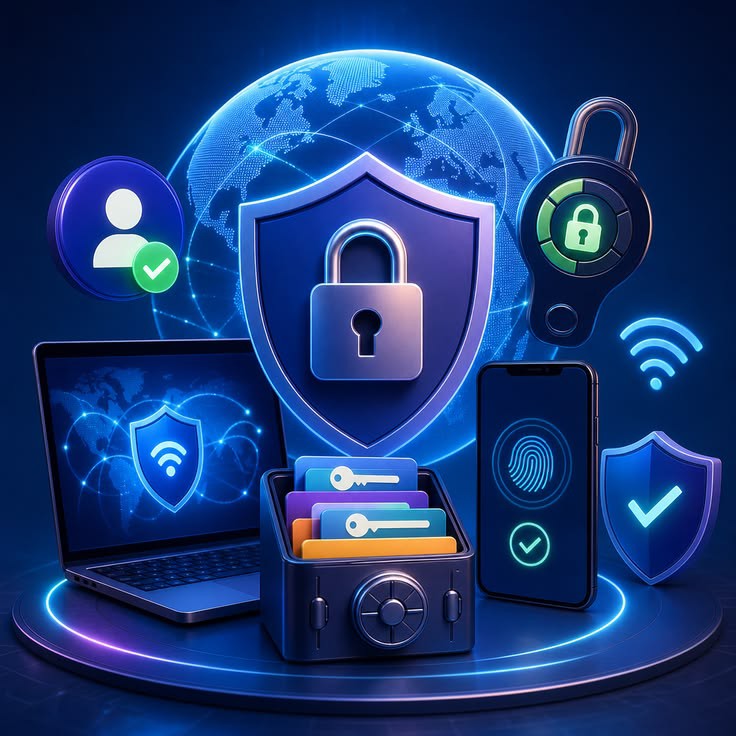
Most people spend a lot of time thinking about their password when it comes to online security, and almost no time thinking about their transaction PIN. That is backwards, because on most financial apps in Nigeria today, your password only gets you into your account. Your transaction PIN is what actually decides whether money moves out of it. If someone manages to get past your password but not your PIN, your money is still safe. If they get your PIN, that is a completely different and much scarier situation.
Let's talk about why this small four or six digit number deserves far more respect than it usually gets.
A password protects information, a PIN protects money
Your password's job is to prove you are who you say you are so you can log in and see your account, your balance, your history, your saved details. That is important, but it is still just access to information.
A transaction PIN has a narrower and more serious job. It exists specifically to authorize the movement of real money, whether that is buying airtime, paying a bill, sending funds, or withdrawing from your wallet. Because of that, a good app will always ask for your PIN separately at the point of payment, even if you are already logged in. This second checkpoint is intentional. It means that even if your phone is unlocked and someone briefly gets hold of it while you are logged in, they still cannot move your money without also knowing your PIN.
This is exactly why financial apps treat the PIN as a second, independent layer rather than folding it into your regular login. Two locks are always harder to pick than one.
Why a short PIN can still be strong security
People sometimes assume a four digit PIN is weak because it is short compared to a long password. But the strength of a PIN does not come from its length alone, it comes from how it is used. A well built system does not let someone sit there and guess a PIN endlessly. After a small number of wrong attempts, the account should lock, freeze, or require additional verification. That single design decision is what turns a short PIN into a genuinely strong barrier, because an attacker realistically only gets a handful of guesses before they are shut out entirely.
This is very different from a password left exposed in a data leak, where an attacker can try it against thousands of accounts quietly in the background. A properly protected PIN does not work that way, since it is tied to real time attempt limits directly on your specific account.
The mistakes that quietly weaken your PIN
Even with good app level protection, your own habits can undo a lot of that security. Some of the most common mistakes people make without realizing it include:
- Using an obvious sequence like 1234, 0000, or 1111
- Using your date of birth or a family member's birthday
- Reusing the exact same PIN across banking apps, VTU apps, and wallets
- Sharing your PIN with a friend or family member "just this once" to help with a transaction
- Typing your PIN in public without shielding the screen
- Saving your PIN in your phone's notes app or a message thread for "just in case"
Every one of these habits creates a shortcut for someone else to bypass the very protection your PIN was designed to provide. A PIN is only as strong as your discipline around it.
Why fintech apps ask you to set a PIN so early
If you have ever signed up for a Nigerian fintech app and been asked to set a transaction PIN almost immediately, that is not an accident or an inconvenience the developers added for fun. It is a deliberate security decision, because from the very first transaction you make, real money is on the line. Waiting to introduce this protection later would leave a window where your funds are only protected by a password, which as we already covered, is a weaker single layer of defense.
What good PIN security actually looks like from the user's side
You do not need to be a security expert to protect yourself properly. A few consistent habits go a long way.
Choose a PIN that is not tied to any publicly guessable information about you, such as birthdays, anniversaries, or repeating digits. Avoid using the same PIN across multiple apps, since a leak on one platform should never automatically put your other accounts at risk. Never share your PIN with anyone, including friends, family, or people claiming to be customer support, since legitimate support staff will never ask for it. And always be conscious of your surroundings when entering it, especially in public spaces like transport parks or busy shops.
How ZamoraxPay handles this
On ZamoraxPay, a transaction PIN is required to authorize payments and withdrawals, separate from your login credentials. This means that logging into your account alone is not enough to move money out of your wallet. Even if someone gains access to your phone while you are signed in, they would still need your PIN to complete a purchase, fund transfer, or withdrawal. It is a deliberate second layer built specifically so that access to your account and authority to spend from it are never the same thing.
Treat your transaction PIN with the same seriousness you would treat the key to a safe, because functionally, that is exactly what it is.